
Propose
The agent produces the first draft: a brief, a report, an answer. It works on your data, inside your environment.

Ternaria is the operating layer where enterprises put their AI agents to work — many agents, one governed operation.
The assessment: 8 questions, 2 minutes.
One of the largest Spanish-language content and broadcasting companies has a research team of about twenty people. Their job: producing briefs by reading and cross-referencing a corpus built over years. Each deliverable took days.
Today, an agent produces the first draft over the full corpus, inside the company's environment, with automatic quality control before it reaches the analyst. The team validates, refines, and decides.
And the director sees the whole operation — no longer a loose result landing on a desk: an operation.
Gartner estimates that over 40% of agentic AI projects will be canceled by 2027, most often for lack of controls. That is the difference between having AI and operating it.
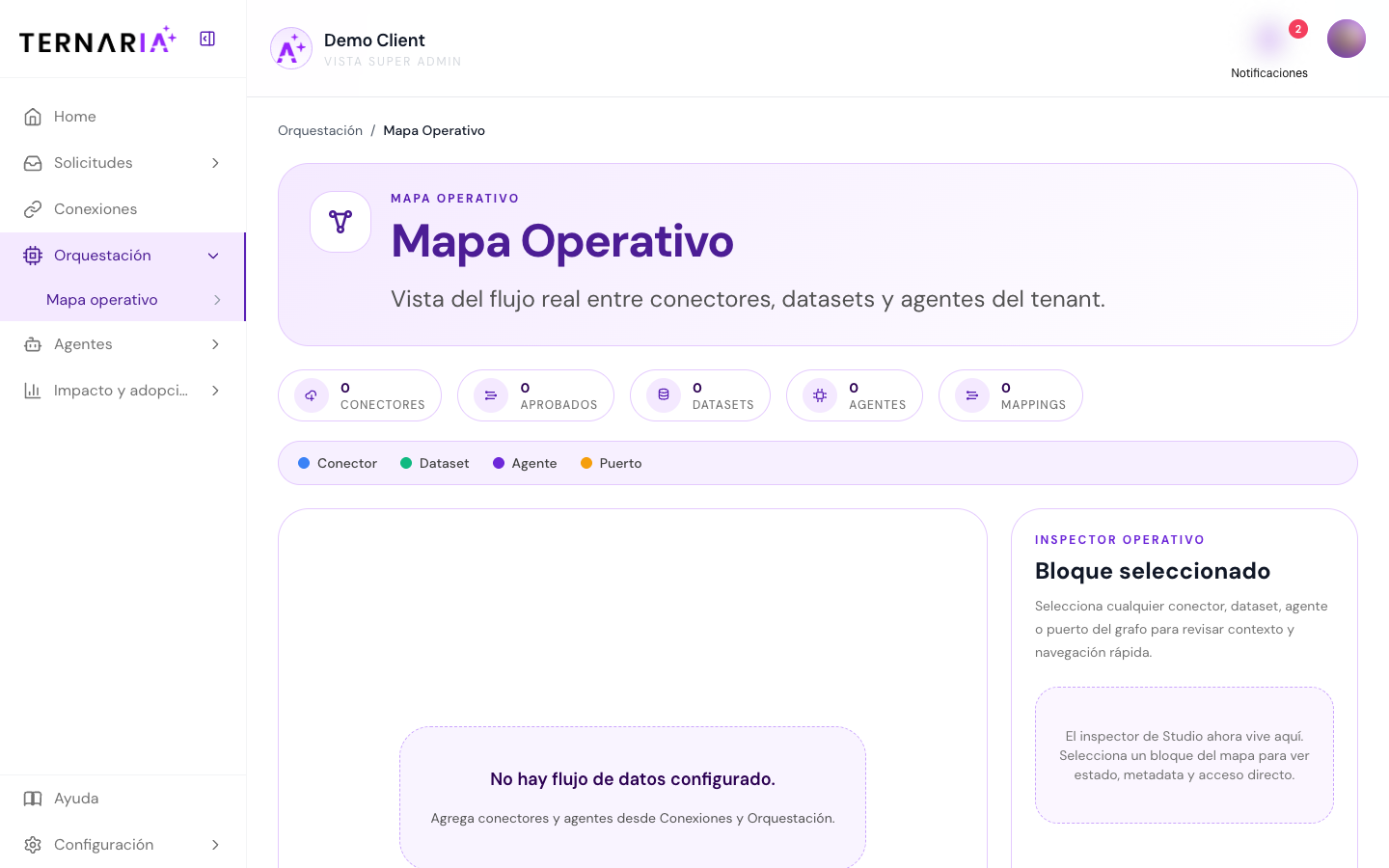
The Operational Map shows which data each agent consumes and produces: inputs, outputs, and the full flow, inside your environment. No hand-built inventories.
See the Operational Map →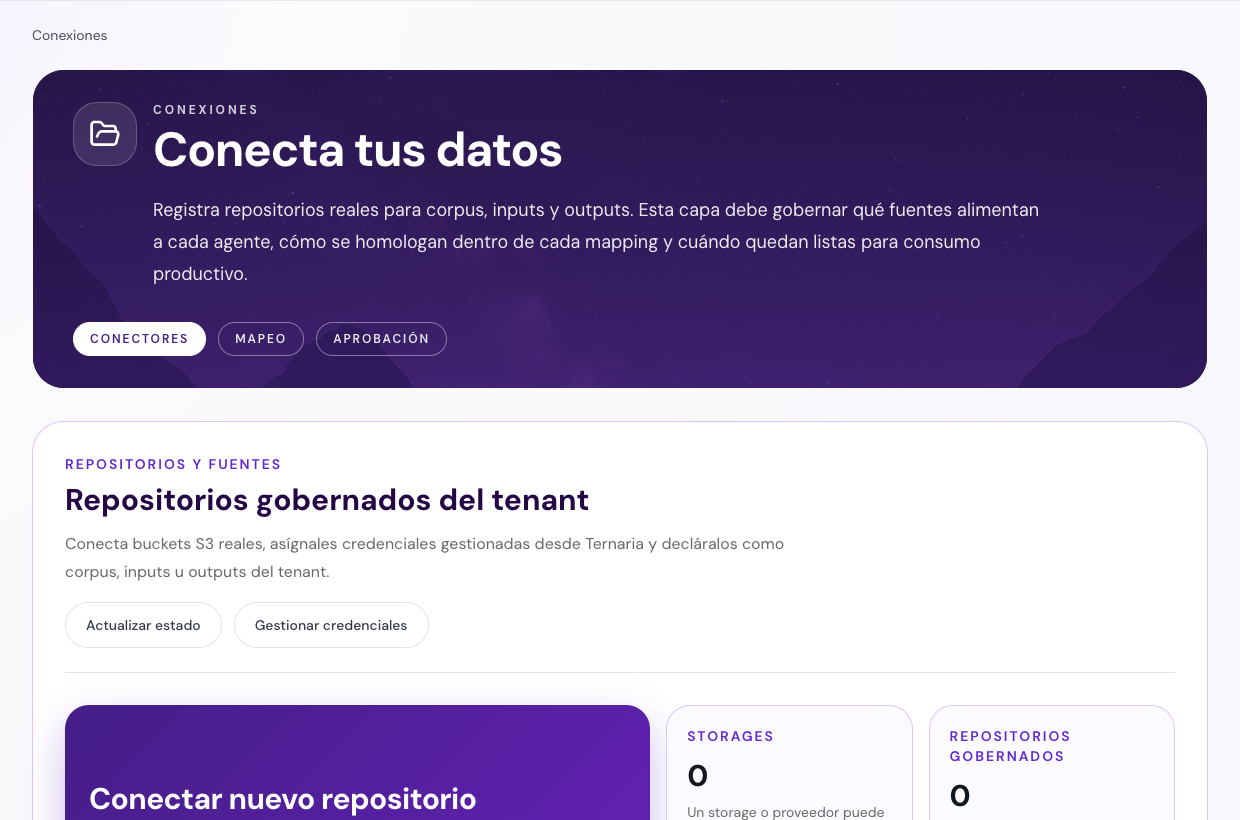
Connect each area's agents — whether they live in Ternaria or elsewhere — and their results become available to the rest of the operation, under the same governance.
See Agents →
Every agent joins the same inventory: who approved it, which process it touches, with which permissions. Evidence, not assumptions.
See Governance →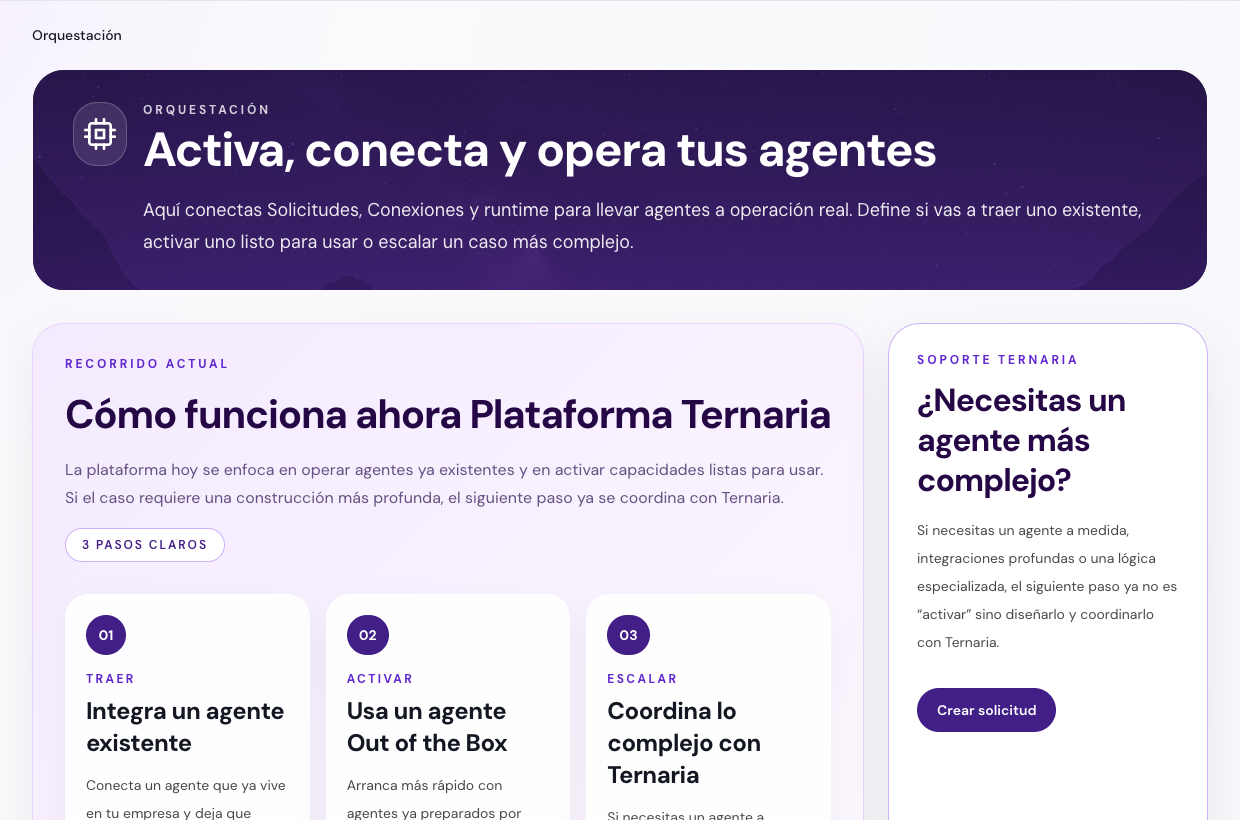
Readiness tells you whether the area is ready. Then: request an agent tailored to your process or install a ready-made one from the marketplace. No six-month project required.
See Readiness →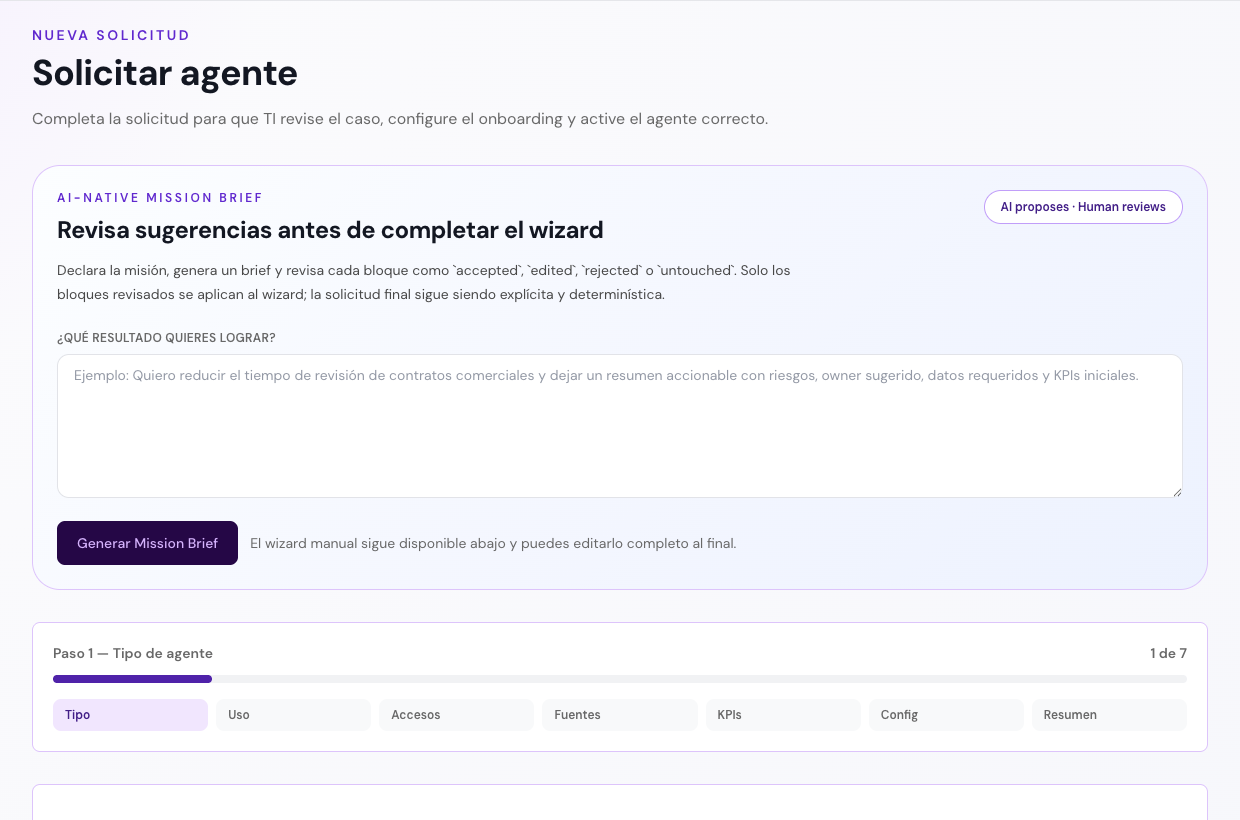
Every deliverable records what it cost and what it contributed. The ROI conversation stops being an estimate and becomes a report.
See Impact →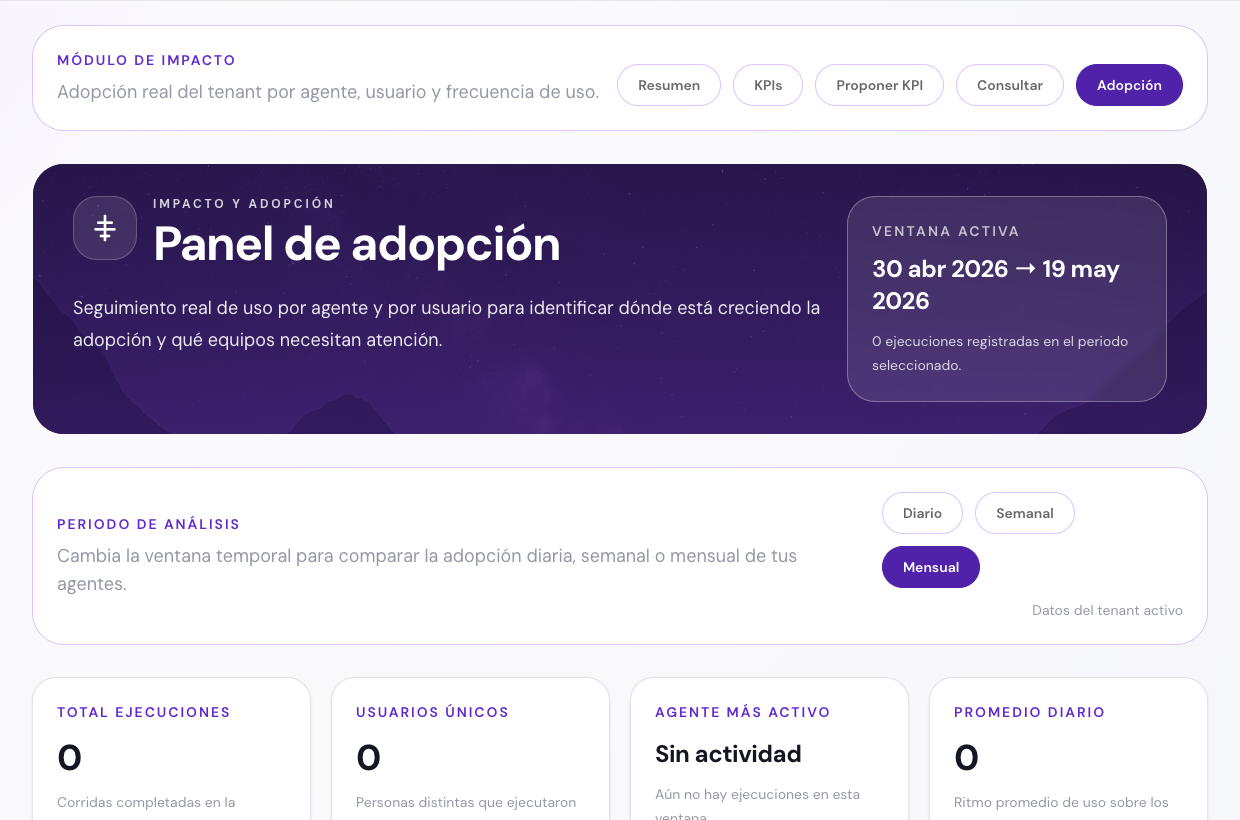
“Nobody knows which data each agent uses.”
40%of agentic AI projects will be canceled by 2027 for lack of controls (Gartner).
No matter how an agent arrives — custom-built, installed from the marketplace, or brought from outside — they all run the same way: visible, governed, and measured.
Know whether the area is ready before deploying.
Request, build, install, or bring your own; operate them all the same way.
Which data each agent touches, visible.
Who approved what, with evidence.
What it cost and what it contributed, per deliverable.
The brain of your operation: what works, what doesn't, what if — and everything in memory.
This is how every deliverable runs inside Ternaria. The decision never leaves your people's hands.
The agent produces the first draft: a brief, a report, an answer. It works on your data, inside your environment.
Your team validates and refines. Whatever requires judgment stays with people.
Ternaria confirms the result and keeps the record: who approved, which data was used, what it cost. Every deliverable adds evidence, not doubts.
8 questions. 2 minutes. Recommendations for your team.
Measure your maturityAs you integrate your agents — whether they live in Ternaria or outside — your AI stack stops being a collection of loose tools and becomes the operation of all your automated processes.
All your agents with their results in one operation. You see which ones contribute, and how much.
You see which ones fail or don't move results, and where the improvement is.
Try alternative scenarios — moving an agent, changing a flow — without touching the real business.
What's learned in each deployment is recorded and compounds: your operation improves with every deliverable.
See the whole operation: which agents run, what each deliverable costs, what value each one contributes. Decisions backed by evidence, not demos.
Delegate repetitive work to agents and keep what requires judgment. Know whether your area is ready before deploying.
Every agent with its inputs, outputs, and permissions visible. Who approved what, with evidence. No shadow agents.
No. It connects them. Your external agents join the Operational Map: inputs and outputs visible, results available to the rest of your operation.
Having AI is hiring agents. Operating it is knowing what each one does, which data it touches, who approved it, what it cost, and what it contributed. Ternaria is that layer.
Not to get started. You can request an agent tailored to your process or install a ready-made one from the marketplace. IT governs; business operates.
No. AI proposes, your team reviews, Ternaria confirms and records it. The decision always stays with your people.
If you already have agents scattered across the company, or you know the first process you want to delegate, book a demo or write to us at hola@ternaria.ai.